Brown rot control: Protecting your stone fruit harvest
October 31, 2025
In short...
- Brown rot, caused by the fungus Monilinia fructicola, is one of the most serious threats to stone fruit production in Canada, causing fruit to rot on trees, after harvest, and in storage, with entire crops potentially lost.
- The disease thrives during extended wet weather and warm temperatures (20-25°C), with highest infection risk occurring from shuck split to pit hardening and again as fruit begins to change color.
- Effective management requires an integrated approach combining cultural practices (removing mummified fruit, pruning infected twigs, prompt harvest cooling) with strategic fungicide rotation across different chemical groups to prevent resistance and protect fruit quality for export markets.
Growing pristine, quality, and marketable fruit is top of mind for Canadian growers, especially when targeting export markets. With fruit expected to endure weeks of shipping and shelf time without spoiling, disease management becomes a critical part of market success. Brown rot ranks as one of the most serious threats to the production and marketability of stone fruit, especially peaches and cherries. This highly destructive disease can cause fruit to rot right on trees, after harvest, and even in storage. That’s why it’s so important growers understand this disease and how to manage it. After all, strong disease management is your best tool for achieving market success.
What is brown rot?
Brown rot is a fungal disease that is caused by the fungus Monilinia fructicola. It can lead to significant fruit damage, especially during wet seasons, and is most significant on stone fruits as it often appears near the end of the season, just before ripening, during, and/or after harvest.
Early symptoms of brown rot include blossom blight and shoot dieback, while later infections can appear as fruit rot – both on the tree and during storage. Being aware of all stages of the disease can help you understand the risk your crop is at for infection.
Here are three distinct signs of brown rot:
- Blossom blight – Infected blossoms wilt, shrivel, and develop gray mold. Petals can appear light brown or water-soaked and look like frost injury. These blighted blossoms fail to produce fruit, and the more blossom blight there is, the greater the risk of fruit rot, as dead blossoms can remain on the plant and release spores that infect fruit later.
- Twig blight and canker – Brown rot infection may spread to twigs (specifically on peaches and apricots), and cause brownish, oval cankers that may girdle and kill twigs. Gumming can also occur on infected twigs.
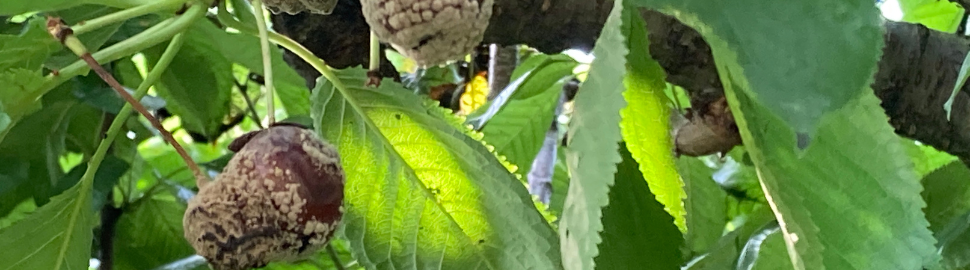
- Fruit rot – Symptoms begin as small brown spots on fruit and quickly spreads until the entire fruit decays. Grayish-tan spores also develop on the rotting areas. Infected fruit will shrivel, turn black, and may either fall off or stay on the tree through winter. Brown rot can be serious on injured fruit, like rain-split cherries or fruit that are clustered together and in contact with each other. Brown rot can also spread after harvest and can cause severe post-harvest losses. Mature fruit can decay within 48 hours under warm conditions.
When does brown rot appear?
Extended wet weather, especially during spring bloom, can lead to widespread blossom infections. The highest risk periods for brown rot infection occur from shuck split to pit hardening (June drop), and again as the fruit begins to change colour.
Warm, temperate weather conditions (20-25°C) are also favourable for brown spot development.
Growers should scout regularly for brown rot, especially every three to five days during the preharvest period. Brown rot will show up first in areas near sources of inoculum, including earlier maturing varieties, mummified fruit on the tree, and where fruit may be physically injured.
What does a brown rot infection mean to my orchard?
No matter the time of year, brown rot is more problematic during wet seasons. Spores produced on blighted blossoms also provide a source of inoculum for ripening fruit.
Under the right conditions, an entire crop can rot while still on the tree. Although that is a rare sight in Canada, brown rot can impact fruit that has been harvested and stored, causing the produce to rot in transport, on the shelf or in storage. These losses are the most economical and impactful to Canadians.
Will the disease come back next year?
Brown rot fungus can overwinter in mummified fruits, either on the ground or still on the tree, and in twig and branch cankers. Mummified fruit left on trees is the most common source of early-season inoculum in Canadian orchards and produce spores, called conidia, that cause infection.
These spores are carried by wind blown rain and rain splashing to the open or unopened blossoms and young shoots. If a film of water (from dew or rain) is present, the spores can germinate and penetrate the plant, causing an infection. Infection timing varies and depends on the temperature. Typically, warmer temperatures will speed up the rate of infection. That means staying proactive by scouting and taking preventative measures to combat the disease is the best way to stay ahead. Read more about spore germination in this British Columbia page.
How do I manage brown rot in stone fruit?
Brown rot can be difficult to control, that’s why a proactive approach is key. An effective integrated pest management (IPM) program, including cultural and chemical controls is necessary to manage disease pressure.
Cultural Practices
Keeping orchards clean and free of contaminants, like infected fruit or twigs is an essential first step. This includes pruning to remove and destroy any fruit mummies (dried fruit remaining on the tree) and cankered or dead twigs. Rotting fruit should be removed from trees to reduce the initial source of infection. Fallen fruit should also be removed from the ground and destroyed promptly.
Harvested fruit should also be cooled to reduce the chance of spore germination.
Chemical Options
The use of fungicide is an important part of a brown rot disease management program as the products can provide a layer of protection from wind-blown or rain-splashed spores.
Syngenta offers several fungicide solutions to help solve brown rot in orchards, including: responsive table code
| Solution | Fungicide group(s) | Target orchard crop | Common timing |
|---|
| Bravo® ZNC | M | Cherries, peaches & nectarines | Dormancy or pre-bloom |
| Captan L | M04 | Apricots, cherries, peaches, nectarines, plums & prunes | Pre-bloom |
| Miravis® Duo | 3&7 | Stone fruits | Pre-harvest |
| Scholar® 230SC | 12 | Cherries & stone fruits | Post-harvest |
What about resistance? Few fungicide groups have activity on brown rot, which means that fungicide resistance is a risk that must be kept in mind for long-term management of brown rot. What can you do to reduce the risk of fungicide resistance? Most simply put, alternate fungicides from different single site groups (like Group 3 or 7 or 12) and use multi-site products (Group M) within the crop protection rotation plan to break up groups.
Although it sounds complicated, creating an effective brown rot management strategy is straightforward when you have the right support. Connect with your Syngenta representative, crop input supplier, or agronomist to optimize your plan.
Always read and follow label directions. Bravo®, Miravis®, Scholar® and the Syngenta logo are a trademark of a Syngenta Group Company. Other trademarks are the property of their respective owners. © 2025 Syngenta
